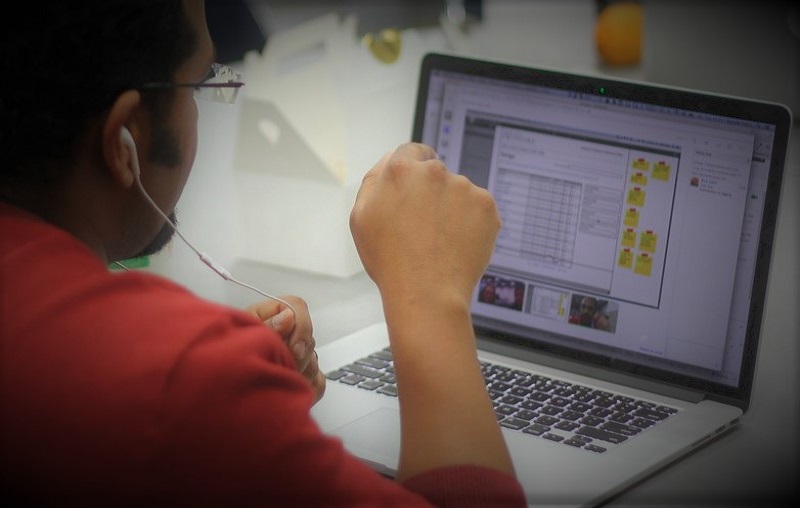
The COVID-19 global crisis has forced millions of people to find ways to be productive when confined to their homes. Hundreds of companies and institutions the world over woke up to realize that we can meet virtually, for real. I remember in one of the interview sessions just a year before COVID, it was suggested that we do it via Skype, but we did not. The standard responses were that it does not have a “human” feel, is too distant, does not enable knowing the other well, people do not pay attention, etc.
Suddenly everyone used e-meetings. Webex (owned by Cisco) reported a 22% jump. Microsoft’s Teams saw a surge of 500% in online meetings. Zoom shares spiked up drastically. Even shares for companies who were providing online platforms for workplace productivity and e-meetings were rising when the whole world was undergoing a crisis. It showed that productivity can be maintained (even if it cannot be improved) through online interfaces. Think of the positives. At the comfort of where you are – office, home, park, school, food court; you can join in. It takes a second and you leave very low carbon footprints (not zero because the data servers are working). It is so funny to see people fly in airplanes and then take the road/train to attend a 2-hour professional meeting, 2000 km away (not a date!). I have sat and participated in group meetings in organizations where each of us – 8 people from different cities was paid to come by via flights, attend the meeting and go back. Does that mean that was more productive and can offset the huge monetary, environmental, health, and social costs it entails for all that travel? I don’t think so.
After the lockdown started, I managed to meet students, colleagues, friends, and possible collaborators more than ever before sitting on the same chair, using a free version of Skype. That is what productivity should look like – not busyness, waste in commuting times, pollution and carbon footprint additions. The lockdown taught us many things. We need to discover newer ways we can run our businesses, schools, and relationships. Meetings are for taking decisions, debates and catching up. There is no need for physical presence in many meetings although that has been how we have always conceived of it (if we can make the Internet backbone stronger and inclusive for everyone to reap).
The development of deeper social interaction is the thing we need to focus on. With the current technologies, a set of simple steps should work that many of us already do: (a) Keep time and more so when you are online [infact, you might be more productive with time management, not less. no coffee! (b) use video with audio options [people can be unprepared to show up but video allows you to look and smile or read the eye (c) Practice till you start talking in difficult negotiations or unpleasant topics as it is easy to drop off now than in a physical meeting room. There are many tips on the internet but I think these basics are good to go. If people are meeting regularly and working, we need to focus on seamless social integration through more technological advancements (like Virtual reality) with a clear mandate – shift to e-meetings, for good. Only when you really need to come down and sign a document or shake that hand, we meet physically. That saves multiple costs.
Imagine how easy it is to dial in from your car (when you are late), for a working parent, a feverish person (who wants to be warm under a blanket). Worst, I have driven down a city road in peak traffic to have a physical meeting. that took me a whole morning. We did the same meeting during the lockdown. Same outcome. The total time was 30 minutes. No costs, whatsoever. What stops us from having an e-meeting? Nothing. I hope we all do more of them irrespective of any situation after the lockdown is over. With all tech companies and startups taking this alternative world of meetings seriously, we are sure to gain multiple fronts.
Does this imply we have no reason to meet offline? No. We must do so and I am repeating – when we want to shake that hand, have tea or coffee together, strike out the deal, sign papers, or run through a pile of research papers jointly. Not for all meetings.