The power of pictures over words has become an adage, with the idea credited to the Norwegian playwright and theatre director, Henrik Ibsen (though, originally he seems to have said something different in line with “A thousand words leave not the same deep impression as does a single deed.”). Advertisers have historically used pictures and stressed the importance of its adage – “One Look Is Worth A Thousand Words” appears in a 1913 newspaper advertisement for the Piqua Auto Supply House, Ohio. Brain scientists have figured out that we process images distinctly, behavioral scientists have shown we can get a gist of an image within a few milliseconds. Advertisers. campaigners and star communication experts have all stressed the power of one picture. What happens when we have a thousand pictures? Would a thousand pictures possibly give us unparalleled information about cities and cultures?
If we are ready to try, the obvious place to look for images is on the Internet. Flickr TM was developed by Yahoo!TM as one image hosting-cum-online-community. One can find millions of photos uploaded by random people. Surveying a wide variety of such pictures could potentially help us glean the city and its associated culture. A search for India on Flickr yielded a complex mesh of pictures but on closer examination, one can see a melting pot of culture, ideas, socio-economic, nature vs cityscapes, and diverse rituals (that makeup one of the largest complex societies of the world), key landmarks, rural versus urban India and more.
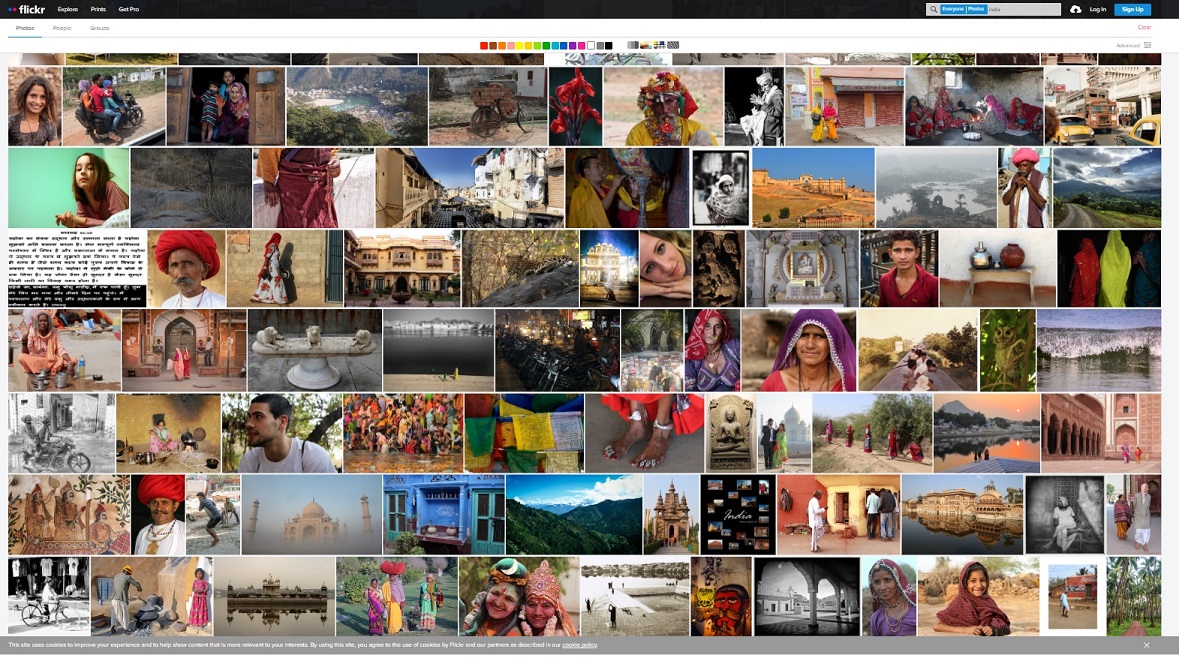
It opens a window to the complexity, heterogeneity, and expansive diverse lives of people in its true sense. It does not have any specific direction, ideology, or agenda – just the plural India – a beautiful picture indeed – worth many-many-words.
Cultural capital is a very important concept (first coined by French sociologist Dr. Pierre Bourdieu in the late 1970s), as a way of understanding how a person’s knowledge, cultural interests, degrees, and exposure to creative pursuits — including travel, art, and technological innovation — are forms of ‘wealth’ that individuals bring to the ‘social marketplace,’ their personal relationships, and their communities.
In a previous study by Daniele Quercia (Department Head Nokia Bell Labs, Cambridge, UK) and colleagues used social media images of cultural events in London and New York City to create a model that can predict neighborhoods where residents enjoy a high level of well-being. The researchers accessed millions of Flickr images taken by people attending cultural events in London and in New York City over ten years. The events included festivals, libraries, cinema, art exhibitions, musical performances, technological demos, handicraft artisans, restaurants, museums, newspaper stands, and theater. The team organized the images, which all had GPS tags indicating the place and time taken, into 25 categories. They also cleaned the data to adjust for outliers, accounting for issues such as many museums not allowing photos of exhibits and different generations gravitating to different choices. They were able to see that the presence of culture is directly tied to the growth of certain neighborhoods, rising home values, and median income. [Paragraph reproduced from Frontiers news (C) Rachel Bishop]
It might be hence possible that more insights can be obtained like socio-economic indicators of a place. I tried searching for England
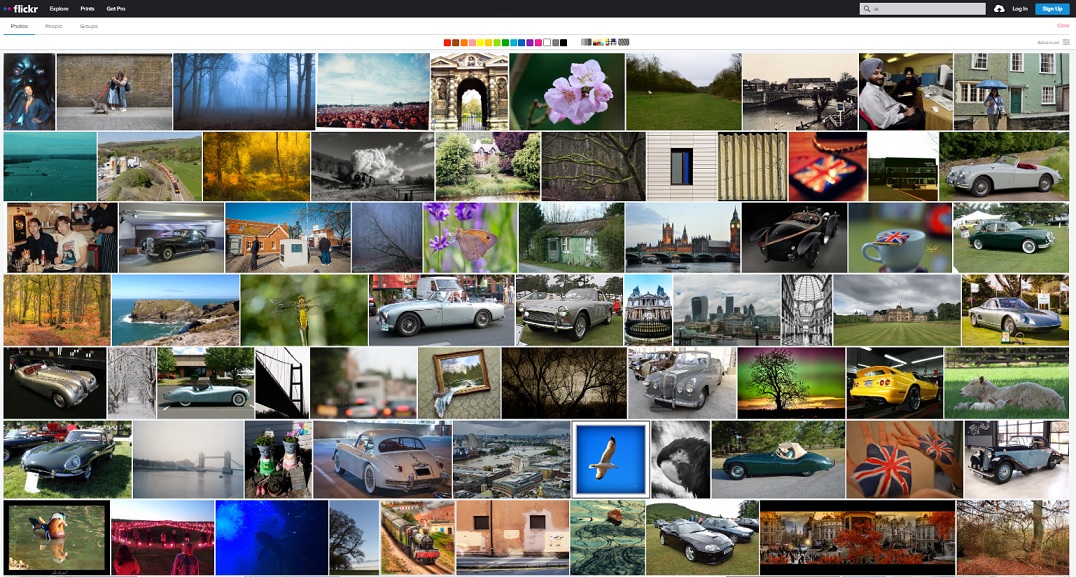
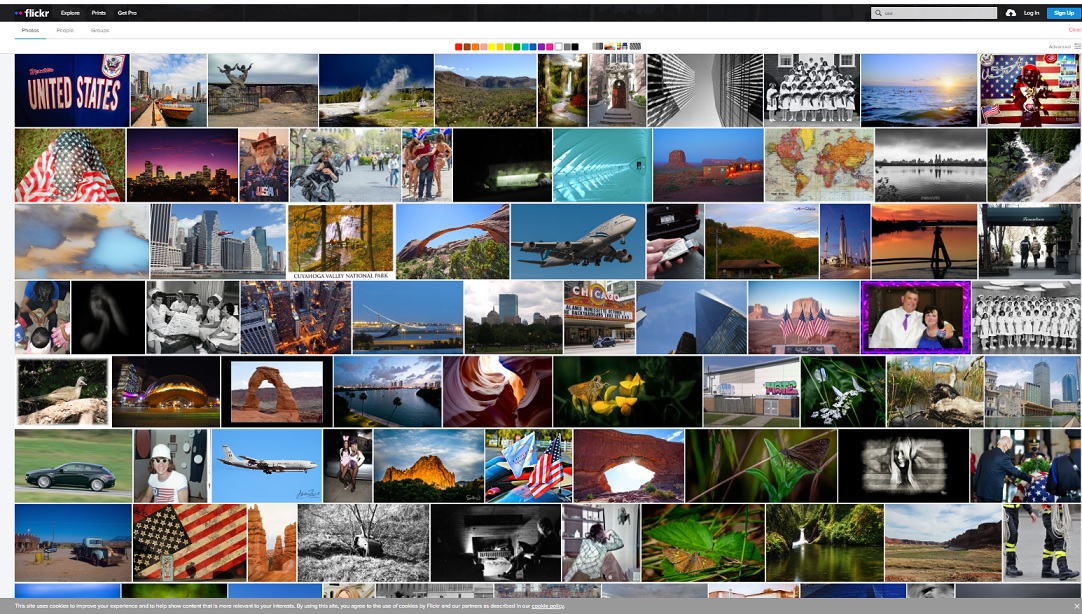
On the face of it, the socio-economic dimensions come out quite clearly. We get a sense of culture that is perhaps not diverse enough but the socio-economically weaker sections are almost nowhere to be seen in England unlike in India. How about USA?
Let us see a bit further east – how about Japan?
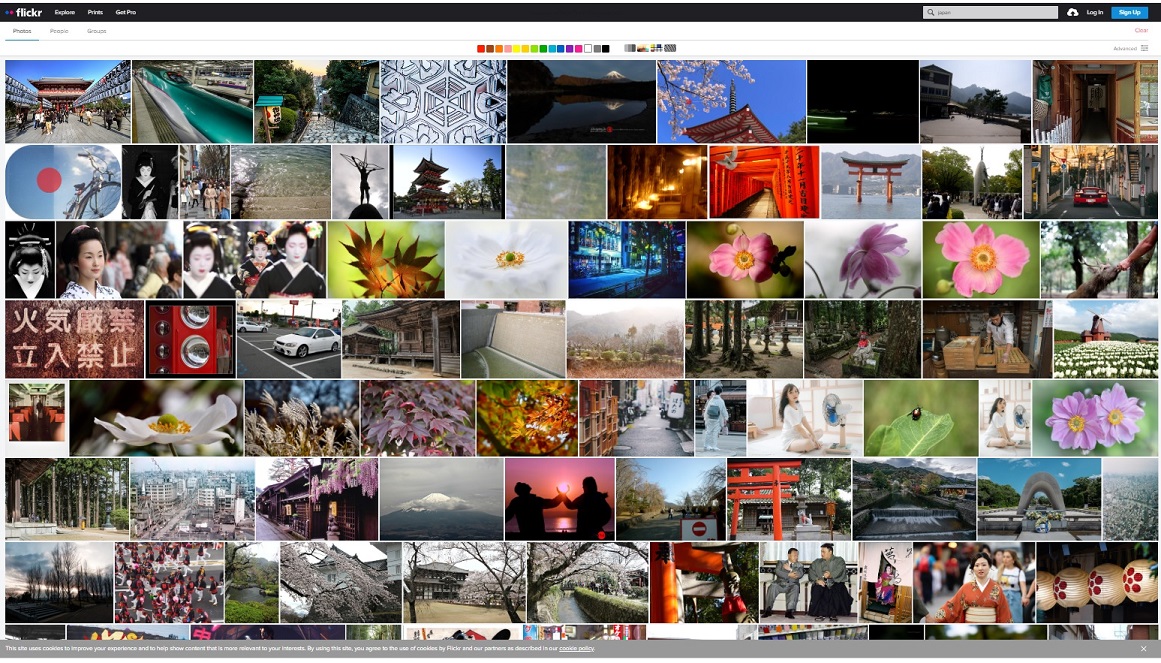
Pretty similar – a great representation of culture, people, and society but seems economically higher.
Here is a look at Brazil (India and Brazil are categorized as Low and Medium income countries as of 2022 by the World Bank but Brazil is a smaller economy at 1.61 Trillion US$ compared to 3.17 Trillion US$ for India). Again, notice relatively diverse socio-economic images and iconic images.
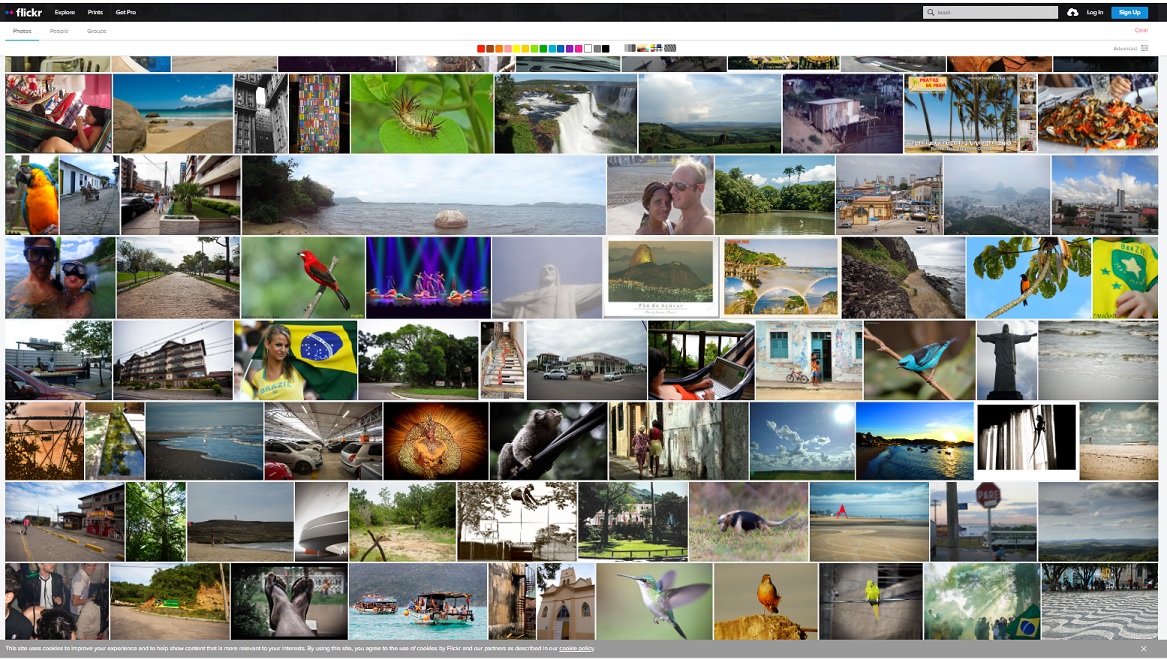
Note that the United Kingdom (England and UK in searches above is a high-income country though in size of GDP matched with India at 3.19 Trillion US$). United States is a high-income country at a hefty 20.89 Trillion US$ and Japan is also a high-income country at 4.94 Trillion US$.
It does seem that a simple glance or a heuristic judgment can somewhat give a sense of the socio-economic background of a country just by looking at – not one – but a hundred images. US, UK are clearly of a different (economic) category compared to India.
On a closer look, we can also pick ones that have a more diverse culture, heritage, and even touristy spots where India seems to stand out. So does USA which has seen a diverse set of cultural practices through immigration by citizens from a host of countries. Cultural capital – in forms of diversity can be a useful input to emotional and cognitive enrichment in the lives of citizens.
We also need to be sensitive about who picks up the images. There should not be a bias to represent poverty more in lower or middle-income countries. This can be tacked by moving from a hundred to a thousand or a million pictures.
One can also make the case for looking at photographs or documentaries by specific people, digital archives, etc. My choice would still be an organic image hosting site which is growing dynamically and has a diverse user base to capture the diversity and stay democratic.
An unobtrusive simple search is a great window – to society the way it is.